Sunday, 15 April 2012

If humans were immortal...


Suppose you became aware that through genetic therapy almost all humans were now immortal (but not vampires). Not only that but disease virtually disappeared and tissue regenerated so that, over time, everyone appeared about age 25. We suggested this in our book series 'A Vested Interest '. What would be the effect?
  • The book suggests a lifetime of 1729 years. That's not immortal but assumes a human will stay healthy until killed by an accident, starvation, war, an 'Extinction Level Event' (ELE) or some other overwhelming event. According to insurance tables that would happen on average in 1729 years.
  • Damaged tissue would be regenerated. An amputee would re-grow a limb, hair would re-grow on the bald, lost teeth would be replaced and body parts lost through surgery would be replaced. That includes contraceptive surgery! Cosmetic surgery would be stable if it was to repair physical or age damage but would reverse if it were done to change appearance.
  • What would happen to the population of the world? The population could be expected to soar initially putting a huge strain on the food supply and the demand for resources and energy. Many millions would starve. However, gradually the desperate 'urge' driving us to reproduce and replace ourselves would be brought under control - we would, after all, have plenty of time for that 'later' when we felt more secure. Eventually the population would be brought under control at a level a great deal higher than it is now.
  • Food would be scarce initially but again this would be resolved as more areas became cultivated including sea farms, 'arid' areas and underground. It's likely that new food sources would be developed including bacterial cultures, fungal sources and direct synthesis. Cellulose from plants. Wheat straw, bamboo, kelp and grasses would be converted to edible food. Cultured meat would be produced on a large scale - that's real meat grown in a lab without killing the animal it was sourced from.
  • Water would be scarce in many areas for some time. A grid taking water from where it is plentiful to other areas would eventually be created.
  • The natural inclination would be to fight for food, land and resources. Initially that's exactly what would happen but we would eventually learn that cooperation produces better results.
  • Soldiers would think twice before fighting for any other principles - it is one thing to give up 30-40 years of life but an entirely different thing to give up 1000+ years. Those who didn't see things this way would probably not be missed!
  • A career would probably not be a lifetime decision. It would be changed many times. You would not want to stay in a hated job and would have plenty of time to learn new skills. The demand for education would be high as older generations go back to school to learn new skills. As far as normal K12 education was concerned the pressure would be off and there would be more time for 'fun' in school with lessons being devoted to leisure activities. K12 would become K15 or maybe even more?
  • Politicians would want to remain in power for much longer, the climb up the political ladder would be much harder. Maybe we would someday elect 'reluctant politicians' who would see it as their civic duty to serve for a time rather than out of a desire for power. After all; anyone who wants to lead a country is probably the last person you should give the job to!
  • Premeditated crimes of violence would eventually decrease. Those inclined to violence would, over time, be eliminated from the gene pool by that very violence. Crimes of passion would no doubt continue!
  • The urge to move to a better place would be overwhelming - even if that meant transforming a harsh environment to make it liveable.
  • Undersea and underground communities would be set up - anywhere there is space available. The Earth's surface might eventually become a park for leisure.
  • Space would be colonised; the Moon and asteroids first, followed by Mars, the satellites of other planets and finally other solar systems.
  • Raw materials and energy would be at a premium. Both will cause problems initially but will be solved as nuclear fusion, deep robotic mining and resources from space become available.
  • Waste heat would become a major problem. Much of it will be recycled though.
  • Recycling of waste would be a major industry.
  • Concerns about global warming would soar for a while then prove unfounded as people realise that sea levels just are not rising. and the temperature starts to fall around 2040 as we enter the next ice age. (Try reading Michael Crichton's 'State of Fear'). The drive to reduce carbon emissions would continue though since we wouldn't be able to burn fossil fuels needed as raw materials.
  • Technology will continue to develop at an ever faster rate. Computers and nanotechnology especially. Look forward to a personal computer you can talk to, carry with you, display within your eyes and hear through your teeth!
  • The average intelligence of the population would increase slowly. A surprising number of 'Darwin Award' candidates would fail to breed.
  • Most medical staff apart from those dealing with accidents and research would be out of a job. An end perhaps to the ridiculous hours they work?
  • Retirement and pensions would be a thing of the past. The working week would be shorter and holidays longer.
  • There would be less 'haste' in everyday life. You now have 'plenty of time'.
  • Leisure demand would soar.
  • Drug companies would mostly convert to biotechnology, go out of business or convert to supplying chemical resources and producing food.
  • People would have an increased awareness of natural disasters and put more energy into averting them.
  • Languages would be less of a problem, people would have the time to learn them and eventually we could see a common language developing from bits of all.
  • Euthanasia centres would be accepted. Who wants to live a long and unhappy life?
  • We would run out of fossil fuels and resort to biotechnology, nanotechnology and asteroid mining to replace them. Biofuels from products such as corn would prove to be a dead end since the raw materials would be needed to produce food. Algae farming would become important.
  • What about religion? Do you think it would last through 1729 years of life?
Is it possible? According to Aubrey de Grey the first person to live to 1,000 is probably alive now. How would this come about? Well reading my earlier blog post Bio-terrorism and the cure for the common cold might give you a clue but if you want the details, you'll have to read our books.

Saturday, 4 February 2012

Did I just get conned by Vista-Print?

This post is aimed mostly at writers and artists of all sorts.

VistaPrint's Website advert.
I'm sure you've seen the adverts from VistaPrint - '250 cards for £2.00'. Doesn't seem a bad deal does it? It got me thinking - I could use something like that to design small promotional cards to help promote the 'A Vested Interest' books.

Well I bit and followed through to the design stage.

A few minutes work produced a design for the card. We decided to use the book cover image from book 4 of the A Vested Interest series - Stones, Stars and Solutions. On it we would put the introduction text from our book website and the website URL. Here's the result:
Not bad for £2.00 we thought. We'll be able to give them out and leave them strategically around Hexham, where I live in England. Then we discovered we could print on the other side and a new design was produced with book names, the DNA image from out original A Vested Interest cover and website and contact information. Here's the reverse side:
Of course there was an extra charge for printing the reverse, £9.99 and that made it seem silly to just order 250 cards. I ordered 1,500 which increased the original £2.00 to £11.00. Still seemed reasonable - £21 for 1,500 cards to my own personal design.

Happy with my work I went on to the next step and at that point found I would be paying a little more.
  • 1,500 cards                             £11.00
  • Printing the rear                       £ 9.99
  • Personalised image (front)        £ 3.49
  • personalised image (back)       £ 3.49
The total was now £27.97 a bit more than £2.00 but I was buying 1,500 not 250.
Hey- there was a special offer on available to me. I could get an extra 500 cards for just £2.24 extra with standard shipping. I got the extra 500 cards but shipping? You mean that's NOT included? On to the next step.
  • Shipping offered several options. I chose the slowest 21 day shipping £6.07
  • Tax was added at this point £7.26
My bill was now £43.54 

Whatever happened to that £2.00? Did I just get hustled?

Moreover, could I have gone to my local print shop with my design and got my 2,000 cards a lot quicker for less?

Update 23 Feb 2012
Well the cards finally arrived today. Pretty mediocre quality. You'd need a great deal of imagination to see the stars on the background. I think too that if I was designing them again I'd leave a plain white area big enough to write a brief note or telephone number.

Monday, 23 January 2012

Blog Hop Contest!

So what is a Blog hop contest?
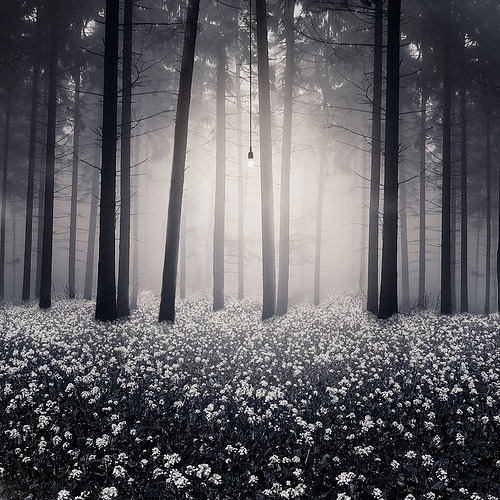
It's a competition amongst writers to write a short section of prose using the picture below as inspiration. You can write a poem, a song or flash fiction but must keep it to 300 words or less. More details at http://anonymouslegacy.blogspot.com/2012/01/blog-hop-contest.html

So here's my entry:


It was deathly quiet. Wein woke suddenly finding himself lying on his back in a forest. He hadn’t a clue how he’d got there. The last thing he remembered was drinking with Gary.


 Wait – maybe that was it? He examined his surroundings carefully. The woodland was quite open with tall straight trees. He couldn't see far though the mist though. The ground was covered with small white flowers; he didn't recognise them but his nose told him ‘wild garlic’.

It was probably early morning since there was a chill in the air. There was nothing really odd except for that complete silence and the single light bulb hanging high amongst the trees.
A light bulb? In the middle of woodland? What was it hanging from? He could only make out a cable disappearing in the mist. He dusted off the forest detritus from his jeans. He was wearing the same T-shirt as he wore last night. He shivered, goosebumps on his arms. He wanted to examine the flowers and trees to see if they were real but needed warmth. Time to find a way out.

He started walking away from the light, since he assumed that would be in the middle – if that’s where he was.

After walking about fifty paces he stopped and looked back. No tracks through the flowers and that light bulb was still in the same position relative to him. If it wasn’t for the trees changing positions slightly, he didn’t seem to have moved.

He dropped to his knees and examined the flowers. They seemed real, the ground wasn’t damp though. He examined a tree and broke off some bark. It crumbled to dust in his fingers. He smiled.

“OK Gary. You win. You can let me out the virtual reality room now.”


In case you're interested Wein and Gary are characters who I borrowed from our 'A Vested Interest' series. 
Wein is an electronics technician with an interest in nanotechnology. Gary is a doctor at the cutting edge of medical research. 

Sunday, 25 December 2011

Twenty ways to get an instant agent rejection


1.      Send a three or more page query letter.
2.      Start your book with a flashback.
3.      Start with a prologue (Yes - some experienced authors getting away with it).
4.      Get someone to write the query letter on your behalf.
5.      Confuse some common words - of/off, to/too, there/their/they're, past/passed, allay/ally, cash/cache, accept/except, bate/bait, sight/cite/site.
6.      Make lots of spelling mistakes and typos.
7.      Handwrite your query.
8.      Use lots of redundant expressions like. 'dark black', 'fiction novel', 'loud shriek' (quiet shriek anyone?)
9.      Send your query as an email attachment.
10.  Beg an agent to accept your work.
11.  Mention how many times you’ve been rejected by agents.
12.  Tell the agent how much your grandmother/aunt loves your book.
13.  Start by moaning about the quality of other books being written.
14.  Submit work which isn't finished.
15.  Lie to an agent. E.g. "Enclosed is the work you requested...."
16.  Don't include a stamped, self-addressed envelope for the reply.
17.  Use another author's well known character or plot.
18.  Include lots of profanity on the first pages.
19.  Submit work less than 40,000 words long.
20.  Submit a first novel of more than 120,000 words.


From my e-book "An illustrated guide to getting published" Get it free at http://www.jaydax.co.uk/downloads.htm or read the updated version free online at https://publishingguide.uk

Wednesday, 21 December 2011

Write and publish a book in a week?

You can download the second edition of this book for free at  http://www.jaydax.co.uk/ downloads.htm or get it at Amazon for 77p / $0.99
UK link | US link

A few months ago I set myself the task of writing and publishing a book in just one week. I completed it within seven days and made the book available at Amazon. Free at the time!  The print version is in full colour but has been withdrawn until edition 3 is available.

So what did I write about? Simple. I put together an illustrated guide to getting published both in print and in e-book format. It wasn't a huge work so I added notes on editing your book, getting an agent, cover creation and promoting the finished work.

Now I'm getting quite familiar with this process, after all I have produced ten books in the 'A Vested Interest' series. I did make some new discoveries along the way though which naturally - I included in the book.

The major difference I found was, because this is a non-fiction book, that I had to include lots of screenshot graphics. Getting them right to display on the 600 x 800, 16 shades of grey screen of a Kindle took quite a bit of work because I also wanted them to display in colour on Android readers. The result was a compromise.

Here's the new things I found out:

  • It's quite easy to put links to a different area of a book.
  • Click a hyper-link in an e-book on the Kindle and it will open that page in the Kindle browser.
  • You can't really do a satisfactory drop capital on a basic Kindle although it's a lot easier now that 'styles' are recognised.
  • You can't left or right align a graphic other than on the current line.
  • MS Word has an absolute limit of 220dpi (dots per inch). Book publishers recommend 300 dpi. You can tell MS Word not to compress graphics but if you output the file as pdf it forgets what you told it.
  • You can print from Word to a pdf file where graphics are NOT compressed. 
  • If you put a screen capture from OneNote into Word it gets saved as 199dpi. The answer is to replace these with hi-resolution graphics later.
  • If you save a bulleted list from Word as a 'Web page, Filtered' file Word will not use the correct HTML but will use a bullet character (Alt 0149) and spacing. This looks stupid on a Kindle. I find the answer is to use the 'calibre' ebook management program to create an epub file and submit that to Amazon.
  • The Create Space Cover Designer looks very basic at first but is surprisingly versatile.
  • Mobi (Kindle) files are almost twice the size of epub (Sony/Nook) files.
  • Calibre makes the job of creating a multi-level contents page very easy.
Want free author help items? Try http://www.jaydax.co.uk/downloads.htm There are other freebies there too.


Friday, 18 November 2011

A plea to ebook users everywhere (but especially in the UK)


Every person who either reads, writes or publishes in the UK should know this:

  • The UK government has a declared intention of reducing carbon emissions.
  • The publication of paper books in the UK leads to almost a billion tonnes of carbon emissions each year. Newspapers and magazines each produce more than this.
  • Production and sale of an e-book involves just 3% of the carbon emissions produced by a paper version.

E-books make far more sense in today's world. It takes an enormous amount of energy to cut down and transport trees. It takes more energy to produce the paper, transport it, print it and distribute it. We have to use energy to travel to the shop and buy books, magazines and newspapers and then we have to carry them around to read them. When we've finished with them it takes more energy to dispose of them.

If you were a student which would you prefer to carry - six textbooks or a Kindle? If you like to read on holiday how about carrying an entire library with you? You can do that with an e-book reader.

E-books make environmental sense yet:

The government charges the full rate of VAT on the sale of e-books and e-zines but no VAT on paper books, newspapers or magazines. They say VAT is charged on e-books because 'it's a service.' Apparently the work of the printing industry in making and distributing the words of writers is not.

Every author in the world should be kicking up a fuss about this nonsense. It makes e-books in the UK 20% more expensive and holds back the industry. At a time when students need to cut back on their expenses, the government is making it cost them more if they choose to buy e-books.

Perhaps the government needs the extra tax income? Well authors earn more from e-book sales than from paper books; that means they will recoup the lost VAT in more income tax.

Every author should be pressing the UK government to remove the ridiculous tax on e-books. Let's bring down the cost to our readers, save those dwindling fossil fuels and at the same time help ourselves.

What can you do? There's an e-petition which we should be promoting about VAT on e-books. Please -


Do everything possible to get this petition to the 100,000 signatures level - the point at which it MUST be debated in Parliament. Even if you are not a UK author this still affects your UK sales.

We need to draw attention to this!

Petition to request the abolition of VAT on e-books http://epetitions.direct.gov.uk/petitions/114

Sunday, 6 November 2011

Cover to Cover - How we produced the covers for our book series

If you search the Internet you'll find lots of advice on how to write and also lots about how to get published. Up to now the route has always been:
  • write the book
  • edit it
  • submit it to an agent
    • get rejected
    • submit to another agent
    • get rejected
    • revise the book
    • repeat 'submit to an agent
  • Either give up or self publish or, if you are one of the lucky few, negotiate a contract
  • Agent submits to a publisher.... and so on
Now however E-books have made it possible for many new authors to publish work that would otherwise end in agents and publisher's slush piles. You can test the water by releasing your book as an e-book, publicize it yourself (For how to do that read John Locke's excellent book 'How I Sold 1 Million... ') and then, if there's a demand, produce a paper copy. I wrote an e-book on the process of producing both the paper copy and the e-book version. You can either buy it at Amazon or get it free here.

Somewhere along the line though you'll need a book cover and there the advice stops. Granted there are websites which offer template solutions but most of them leave a lot to be desired and frankly - a book is judged by it's cover.

We've written and published five books so far in our A Vested Interest series and in the hope that our experience will help, here's what was involved in designing the covers.

We wanted the cover of this book to reflect what the story was about so we had to include:
  • DNA to indicate this was about medical science
  • A semi-transparent mechanical bug to show that technology was involved
  • A castle to represent the location Langston Castle in the book and to show there was a bit of history involved
  • An old mine tunnel to represent the secret underground base
Now Shelia and I are not bad at using graphics programs - we picked up that skill when we spent three years as illegal immigrants in Canada, supporting ourselves by building websites. So we took some pictures using a very basic digital camera and started putting together a cover. The actual process I will detail later but here's the result:
The original background image was a picture I took of Blackett Level near Allendale, Northumberland. It was a little overpowering so I faded it out by putting a semi-transparent white layer over the top. Into that I merged a picture I took of Langley Castle and that DNA picture. The 'bug' was inspired by those in the film 'The Day the Earth Stood Still'. On the e-book copy we moved that to the other side. Later we added the Triplet family coat of arms to help identify the book as part of a series.

The plot of this book involved an unpleasant secret buried in the family for almost a thousand years. The secret was revealed in an old diary. To reflect this we created a cover looking like an old book and featuring the coat of arms of the Triplet family. The old book was to be dark colored to reflect the title but when we got the first proof back from the publishers it was almost black. The final version was a lot lighter. For the old book I scanned an old copy I have of Uncle Tom's Cabin and then removed the text. With the aid of my son Adam we created a 'coat of arms' and then turned it and the book cover text gold.

On this one we didn't put the coat of arms on the spine since it was already on the front cover and the spine is much narrower.

Book 3 - No Secrets
No Secrets was very much a continuation of Dark Secrets so we decided to use the same layout. Obviously we couldn't use the same image on the front so chose a Celtic knot instead, symbolizing eternity. Of all the covers it's the one we are least happy with and it may change.

Book 4 - Stones, Stars and Solutions
In this book the Triplets travel the world visiting pyramids and other locations while following clues left in an ancient document. One of the locations is Death Valley, another is the Mayan pyramid at Chichen Itza, Mexico. We started with a black and white picture of Death Valley which we colored dark blue. To that we added the pyramid viewed through a 'window' on the front cover and framed in vegetation from the jungle in Mexico. On the back we added our idea of the power mechanism revealed at the end of the book.
People liked this cover so much they asked if they could use it as a screen background. We obliged with a version without the text, coat of arms or vegetation. Find it here.

Book 5 - Leap of Faith
In this book there's a location Spirit Canyon in Arkansas. It was one of the places mentioned in Stones, Stars and Solutions and also appeared in No Secrets. Spirit Canyon features a stone cabin which you can only get to through a cave and a waterfall. We wanted to show this place on the cover. The problem is that though we know it's location, the actual place doesn't exist so we had to make it with bits and pieces of other pictures.
For a book cover you need high resolution pictures because the file you send to a printer is 5,700 by 3,900 pixels in size although the image I need is 3,510 by 2470 pixels. I start with a template document from the printer. It's actual size depends on the size and thickness of the book. If you use CreateSpace as your publisher this template is worked out for you when you upload the book contents. It can be a little difficult to find but it's there.

Here's what we started with:

  • a picture of a log cabin in Texas
  • A cave in Arkansas
  • A woodland picture in Arkansas
  • A stone cottage near where we lived
  • A picture taken inside the old lead mine at Swinhope Moor, England
  • a blue eye

   ...and here's what we ended up with
In case you wonder, here's where the joins are...

Now this picture is a little busy for a book cover and it's not perfect. I chose to add text with a semi transparent background to hide the imperfections.

Making a cover like this isn't hard. You just need a computer with lots of memory and a decent painting application which can use layers, masks, feathering and  bézier text. The industry standard program is PhotoShop, but there are others such as Corel PaintShop Pro or The Gimp which can do the job and are much less expensive. There are lots of tutorials available on the web explaining exactly how to merge images so I don't plan on explaining this here.

 I'm still not happy with the front and spine text on the cover since although it's fine on a printed book it fails to stand out in the smaller versions used for e-books and at Amazon. The spine text could be made clearer by turning it through 90 degrees but I, for one, hate having to turn my head sideways to read the text on book spines. I'm also a little dubious of the base of the stone cabin which doesn't quite fit on the ground correctly. I probably need to add some weeds here to cover the join.

Now - I've explained how we chose the covers. What are your thoughts? Which cover do you like the best and which do you think we should change?

Update April 2012

We've now added an additional book 'Regret and Retribution'. In this book some of the action occurs on the top of a mountain in Arizona where the characters come under attack by a hostile alien. Fortunately, the alien  takes human or animal form, so I didn't have to come up with what he/she looks like. I used a modified sky scene from Death valley (used already in Stones, Stars and Solutions) and to that added a mountain top scene. The actual mountain used was Helvellyn, a mountain of England's Lake District. In fact I used it twice, once in the background and again, mirrored and stretched in the foreground. On the rear mountain I superimposed a modified picture of  a galaxy. The whole thing was darkened and a faint blue glow was added at the edge of the foreground mountain.. Finally I added the cover text. The trick here is to make sure that it's readable even at a thumbnail size used on Amazon's website. Here's the result:

Update July 2012

Consequences was released at the end of July 2012. It's cover shows a moment when Donna was released from a 'mindstorm'. It's dusk, raining hard and misty. The helicopter searching for her is driving the rain and Donna holds her hair to prevent it lashing her eyes. She spots something on the ground and reaches for it. We used the same mountain top but added storm clouds. The figure of the woman caused a few problems, it's actually made up of four different images. She's making an unusual movement - reaching with her left arm over her right knee. I would have swapped arms but Shelia, who has long hair, told me 'Once you have your wet hair in a strong wind under control, you don't risk letting go.'

Update November 2012

Here's our most recent book cover for 'Ashes to Ashes'. We start this book with the aftermath of an alien possessed woman running wild in the mine complex. Death plays a big part in this book at it's beginning and that is reflected in it's cover
Here's just the front of the book: